LOOK DEEPER
This part of my Reflective Journal is aimed at demonstrating how my comprehension of the Stakeholder/Shareholder approach and the Trust/Truth/Credibility topics has broadened my mindset and changed my way of thinking.
First and foremost, I finally started to comprehend the process of communication as a broad global work and to think strategically in terms of organisation. During previous experience with work, I tended to bury myself with everyday office routine chores and multiple small tasks rarely taking into consideration strategic planning and to going beyond that. For instance, I was a young specialist when I joined the newly created Academy of Patrol Police of Ukraine as a press office chief. At that point I was the only one member of the press office team so I was challenged to create and begin the communication between the police and the public on a blank page. I had to act quickly and manage multiple tasks altogether – brand book, social media pages, a website, correspondence, communication with journalists, etc. Every day I literally tried to balance all these small routine tasks trying to keep the Academy’s press office alive. If I did the same job now, I would take my time to define key, primary and secondary stakeholders of the Academy of the Patrol Police (see the pic. №1) and would start every business day by answering three bedrock questions – which purpose should I reach, how to reach that point and what mission should drive me from day to day. “Regardless of WHAT we do in our lives, our WHY — our driving purpose, cause or belief — never changes”, – said Simon Sinek, the author of the “Start with Why” book.
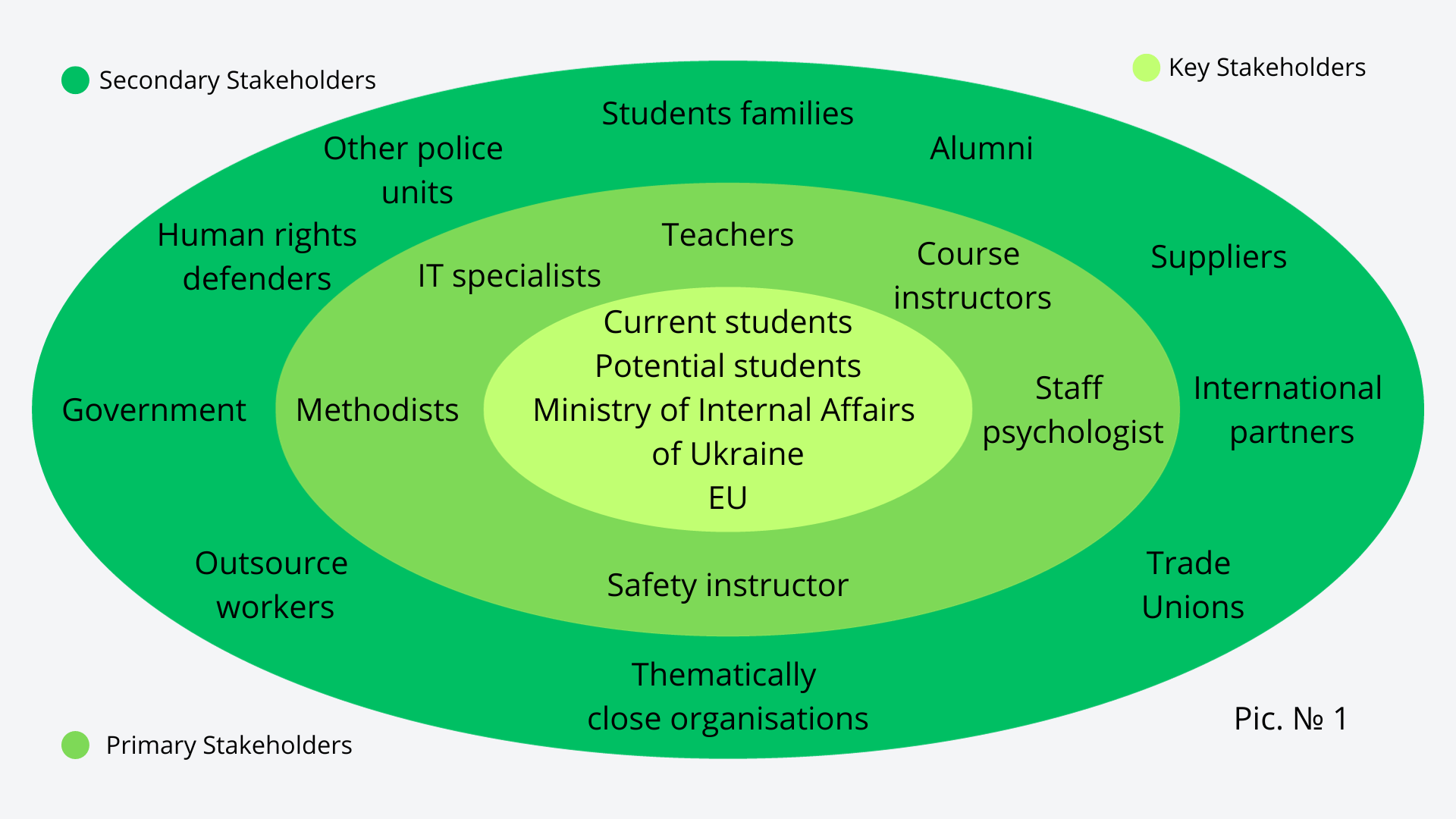
While mapping the Academy of Patrol Police stakeholders, I placed the Ministry of the Internal Affair and European Union in the “Key Stakeholders” section as these partners are promoters according to the Mendelow Matrix Model and are those who obtain the highest level of interest and power with the Academy of Patrol Police activities. Bloggers, media and so-called influencers are crucial for this communication indeed, however, I didn’t incorporate them to my map, as I consider them to be channels for the message.
PREDICTABLY POOR SERVICE
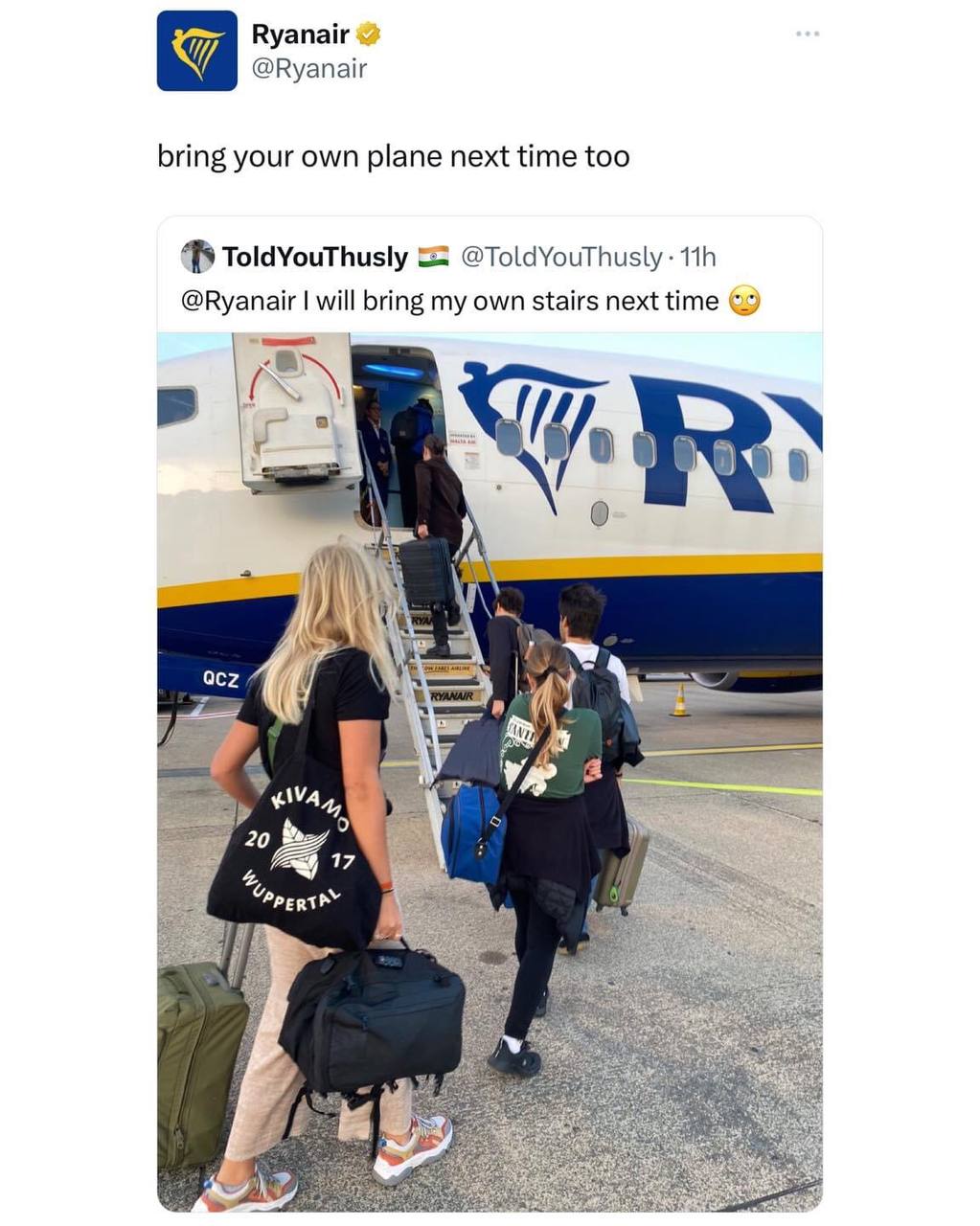
Another valuable insight for me was the idea that trust in communication may be maintained thanks to such an important component as predictability – even if the service is predictably bad. Before this comprehension I was convinced that the main mission of the communications manager is to highlight advantages of the organisation straightforwardly and to demonstrate sympathy to all clients (including rude and unfair ones) even if it is not sincere – which, I see clearly now, is way too simplistic and even childish. ‘Ryanair case’ is a significant example of such predictable and transparent communication indeed. Here is one of the most recent examples of a casual Ryanair way to communicate – an airline’s reply on their official Twitter account with 786K followers to a dissatisfied traveller from India. “The post on X, formerly Twitter, left many confused about what they (passengers) were actually complaining about”, – as reported by the ‘New York Post’ and then adds: “The response was described as ‘savage’ and ‘brutal’ but celebrated by social media users”.
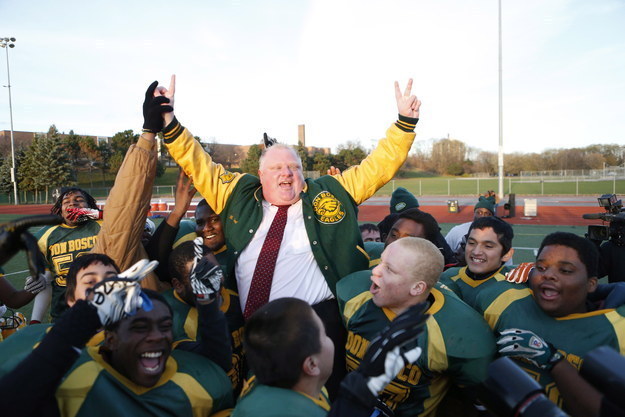
In turn, I am still interested about the dilemma of how to maintain trust with publicity while promoting odious or provocative organisations and politicians is still unclear. A former Toronto Mayor Rob Ford, “political rock star”, was loved by supporters after he gained international notoriety after admitting smoking crack cocaine in 2013 (pic №3). “The ability to appear real, to do things people didn't expect from politicians. That is the part of Ford that people always seemed to embrace”, – says Jamie Strashin in CBC News article.
I came to such a conclusion: in an increasingly hustle and bustle world, customers are fed up with artificial smiles and clingy friendliness. Unexpected bursts of something very human and even clumsy – this is what communications specialists should feel with the heart, not brain, to embrace these charismatic features in their organisations and to embrace them. Nobody should force anything fake and nothing should be sugar-coated in order to sell your products and services.
“Why did the public choose to always forgive this man, always creating an avenue for a comeback?”, – asks Jamie Strashin. The journalist answers his own question: “People love an underdog. And Ford, the anti-politician, the guy that many thought was too stupid to be mayor, was able to fill that role”.
Nevertheless, a tricky ethical question arises: when we, PR specialists, encourage the public to “embrace special features” of a tainted politician or a poorly organised airline, should we be in charge of the role that our employers play in the lives and fortunes of people, and will this transparency in communication work when a good-quality, but still affordable airline appears? I am now convinced that in my further work, I will always keep this question in mind.
FURTHER EDUCATIONAL GOALS
Hopefully I will develop my understanding of strategic intrapersonal and in-house communication as this is a crucial part of a PR trade success as well.
BIBLIOGRAPHY
1. BBC. (2016). “Rob Ford, Toronto ex-mayor, dies aged 46 from cancer”. [Online] https://www.bbc.com/news/world-us-canada-35872594 (accessed on: 14/10/23)
2. Francis, C. (2023). New York Post. “Ryanair tells passenger to ‘bring your own plane’ after narrow stair complaint”. [Online] https://nypost.com/2023/10/12/ryanair-delivers-a-savage-response-to-a-customers-complaint/ (accessed on: 14/10/23)
3. Ryanair. (2023). X. “bring your own plane next time too”. [online] https://twitter.com/Ryanair/status/1712054779449430128 (accessed on: 14/10/23)
4. Sinek, S. (2011). Start with why. Penguin Books.
5. Strashin, J. (2016). “Rob Ford: A mess of contradictions whose fans were quick to forgive”.[online] https://www.cbc.ca/news/canada/toronto/rob-ford-behaviour-1.3492582 (accessed on: 14/10/23)

